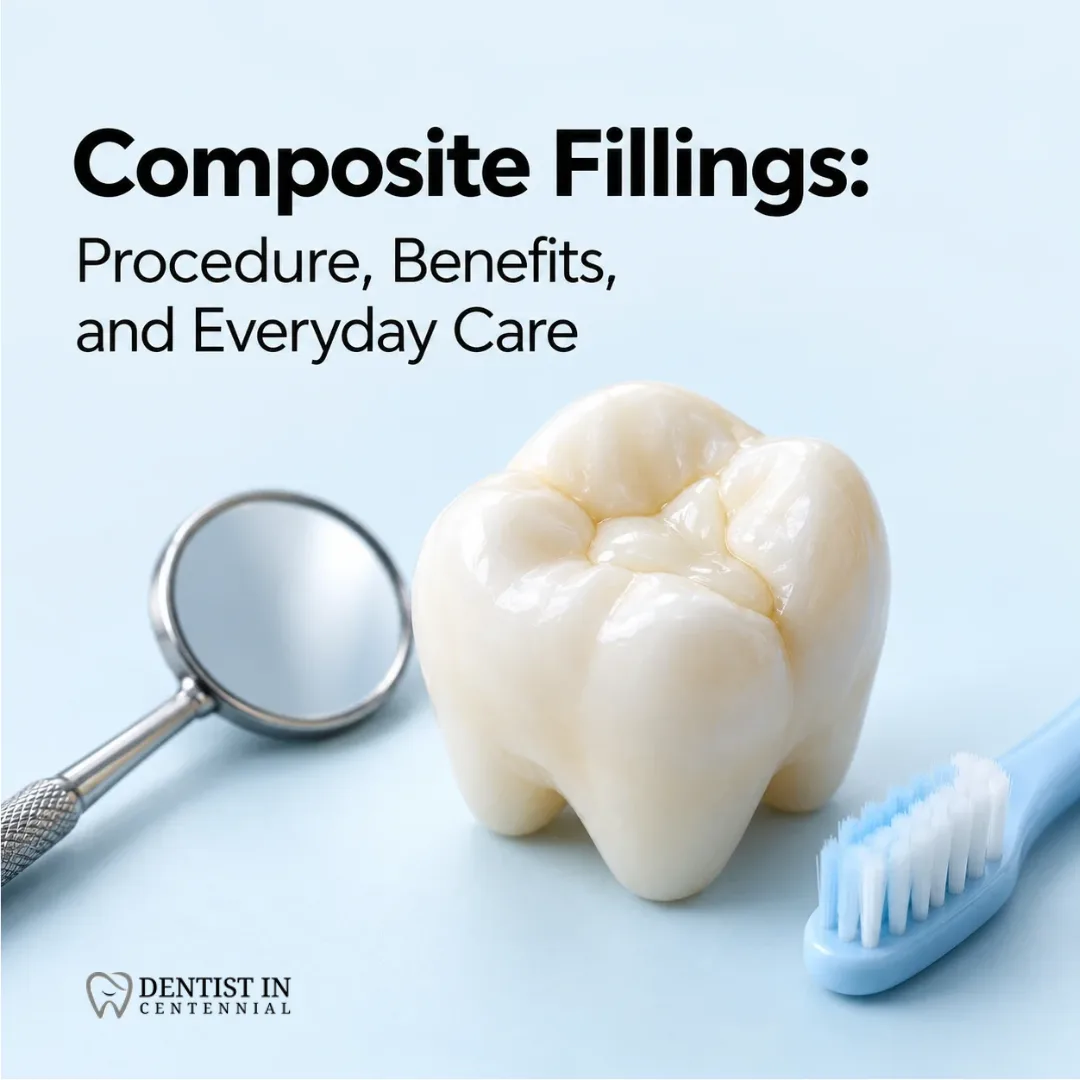
Many people spot a dark spot or feel a sharp bite and worry about a cavity. They fear tooth pain, sensitivity, or an old metal filling that shows. This worry often keeps them from calling the dentist. That can make the problem worse.
Composite fillings bond to the tooth and match its color, so they look natural. Think of them as a small patch that blends in. Here you will understand the procedure, the main benefits, and simple daily care tips.
Dentists clean the tooth and get rid of any decay. Next, they layer the composite resin, harden it with a special light, and shape it to fit your bite.
The author has watched many cavity treatments up close. That hands-on view clarifies the prep and removal steps.
Composite resin works wonders in restoring teeth. Its versatility makes it a favorite choice for many dental procedures.
With an efficient application of composite resin, patients can enjoy better oral health with restored functionality and aesthetics. Moving on from this exciting procedure, let’s look into all the benefits that come with using composite fillings.
Shaping and curing the material is crucial in the composite filling procedure. This step gives the filling its final form and strength.
Composite fillings offer a natural look that blends seamlessly with teeth. They preserve more tooth structure compared to traditional fillings, making them a smart choice for many patients.
Composite fillings blend well with natural teeth. They match the color of a patient’s existing teeth, making them less noticeable. This feature is a big plus for those seeking aesthetic dentistry.
People appreciate the way composite resin can mimic their tooth shade, allowing for a seamless smile.
A friend recently had two cavities fixed with composite fillings. She felt relieved knowing her smile would look good as new. Less attention-grabbing than metal options, these fillings promote confidence in social situations too.
After considering looks and function, many choose composite materials for their cavity treatment needs.
Composite fillings offer a minimally invasive option for cavity treatment. Dentists carefully remove only the decayed parts of the tooth, leaving most of the healthy structure intact.
This approach helps maintain tooth strength and integrity. People often appreciate this aspect since it means less drilling and discomfort during the procedure.
These fillings bond directly to teeth, which provides an excellent fit. Patients love that they can keep more of their natural tooth while still addressing dental decay effectively.
Furthermore, composite resin has biocompatibility; this makes it safe for patients without causing sensitivity issues. After learning how composite fillings work, one might wonder about proper care to keep them in great shape every day.
Good dental care helps keep composite fillings in great shape. Regular brushing and flossing remove food particles and prevent plaque build-up.
People should also watch what they eat. Some foods can stain or damage a filling, so being cautious pays off!
Keeping composite fillings in good shape is essential for oral health. Proper brushing and flossing help maintain the beauty and strength of these dental restorations.
Good daily care will help maintain both the appearance and functionality of composite fillings, leading seamlessly into understanding how to avoid foods that stain or damage these restorations.
Proper brushing and flossing techniques keep a filling looking fresh. Some foods can threaten that fresh look. Dark beverages like coffee and red wine stain composite fillings. Acidic foods, such as citrus fruits, can weaken the bond of the resin composite to the tooth.
Staying away from sticky candies helps too. They can pull at fillings or dislodge them altogether. An individual may want to consider protective measures during meals. For instance, using a straw with dark drinks minimizes contact with teeth.
Simple habits like these promote lasting oral health and prevent unnecessary dental visits down the line.
Composite fillings are dental restorations made from a mixture of resin and glass particles. They blend well with natural teeth, making them a popular choice for cavities.
The dentist starts by numbing the area around your tooth. Then, they remove decay and clean the cavity. After that, they place the composite material in layers, shaping it to match your tooth.
Composite fillings look like natural teeth; this makes them less noticeable than metal options. They bond well to your teeth, which can help strengthen them too.
Caring for composite fillings is easy! Brush twice a day and floss regularly to keep food particles away from those areas. Avoid hard foods that could damage the filling; think of it as treating your teeth like delicate treasures!
Tell us a little about what you need — we'll be in touch shortly.
20269 E Smoky Hill Rd, Centennial, CO 80015, United States

Hi! I'm Tooth fairy! Your AI Assistant Ask me anything