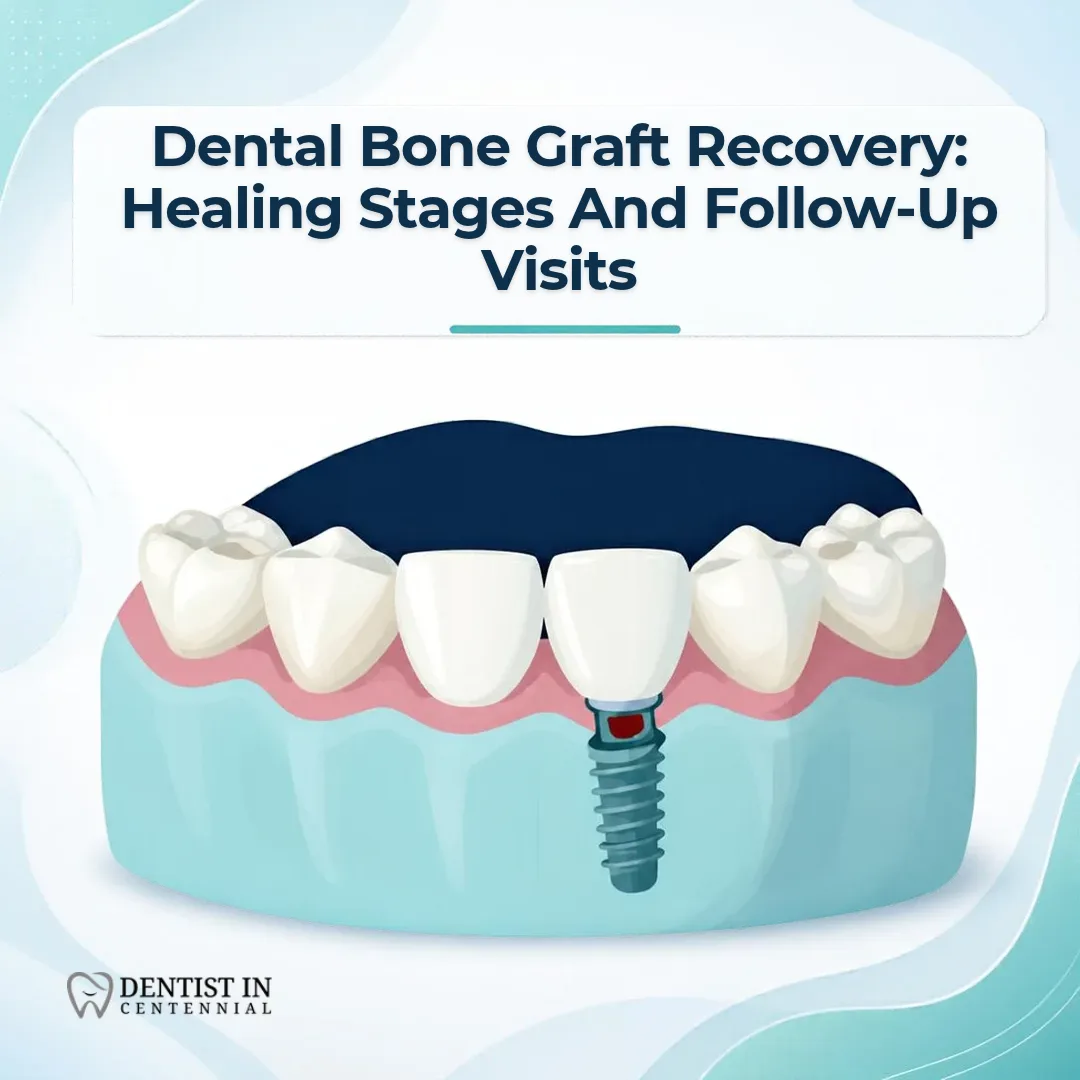
Many people feel lost after a dental bone graft. Pain, swelling, and a fuzzy timeline make them worry about healing and implant plans. They ask when the pain will fade, when bone grows, and when a dentist will clear them for the next step. That worry can feel like watching a seed and waiting for it to sprout.
One fact helps calm nerves, bone grafts need time to fuse with existing bone, often several months. Here you will understand the healing stages, from the first 48 hours to months two through six.
Healing from a dental bone graft comes in waves, with each week showing new changes in the mouth. Each phase shapes how quickly the bone tissue grows back after surgery.
The patient will have bleeding and swelling at the site. Apply firm pressure with gauze for 30 to 45 minutes. Use ice packs on the cheek for 20 minutes on, 20 minutes off during the first 24 hours.
Take prescribed pain medication on schedule. Antibiotics may start the same day. Avoid spitting, drinking through a straw, and smoking. Soft foods help protect the graft and bone tissue. Expect some tenderness and mild inflammation.
They should sleep with their head raised for the first two nights. Start gentle saltwater rinses 24 hours after surgery, three times a day. Do not brush directly over the graft for one week.
Call the clinic for heavy bleeding, fever over 101.5 F, or increasing pain after 48 hours. Keep followup appointments to track bone regeneration and recovery.
The first week after a dental bone graft is crucial for recovery. During this time, patients often experience swelling and tenderness in the surgical area. This is normal as the body starts healing.
Soft foods can help ease discomfort while keeping nutrition up. Applying ice packs can also reduce swelling; however, applying them directly to the skin isn’t recommended.
Patients might notice changes in pain levels throughout the week. Pain usually peaks around day three but begins to decrease after that. Keeping prescribed medications handy ensures comfort during recovery, so following post-operative care instructions matters greatly.
Graft stability is vital since it sets off bone regeneration processes essential for future implant placement; therefore, taking good care of oneself during this stage aids overall success in healing phases ahead.
After the initial healing in the first week, patients enter an exciting phase: early bone growth. Around this time, new bone tissue starts forming at the graft site. This process is crucial for successful recovery. The body works hard to regenerate and integrate the graft material with existing bone.
Patients may notice some swelling or tenderness during these weeks. However, it’s a sign that everything is moving in the right direction. In most cases, by week four, significant progress occurs.
People often feel encouraged as they see signs of healing and improvement in their oral health after dental surgery. Staying mindful of postoperative care helps speed up this stage even more.
Months 2 to 6 mark a crucial phase in dental bone graft recovery. During this time, the body begins to harden and mature the newly implanted bone tissue. Patients can expect gradual improvement in swelling and tenderness as healing progresses. The medical team will closely monitor the integration of graft material with existing bone.
This period is vital for successful bone regeneration. Strong connections form between new and old tissue, ensuring stability for future dental implants. Regular follow-up appointments help track progress and address any concerns that may arise during healing.
This proactive approach promotes optimal outcomes as patients move toward full recovery after surgery. Scheduling these visits remains essential for long-term success following their procedure.
Several elements impact how fast someone recovers from a dental bone graft. Patient health plays a big role in healing speed. Lifestyle choices, like diet and habits, also matter greatly.
The type of graft material used can affect recovery time too. Additionally, the techniques employed during surgery influence outcomes significantly.
Patient health and lifestyle play a big role in dental bone graft recovery. Good nutrition boosts healing and helps combat inflammation. A diet rich in vitamins, minerals, and protein speeds up tissue regeneration.
Exercise affects blood flow, too; light activities can enhance circulation but avoid strenuous workouts right after surgery.
Smoking slows down recovery significantly. Smokers often experience more complications during the healing process. On the other hand, those who maintain a healthy lifestyle usually enjoy smoother recoveries.
Stress management is essential as well; high stress can hinder healing by affecting the immune system negatively. Overall, taking care of one’s body before and after surgery makes a noticeable difference in recovery time and outcomes.
Types of graft material affect healing speed and long-term outcomes.
| Material | Source | Key Benefits | Typical Use | Notes on Healing |
|---|---|---|---|---|
| Autograft | Patient's own bone | Bone forming cells present; high success | Sinus lifts, ridge augmentation, small grafts | Integrates fastest. The donor site adds recovery time. |
| Allograft | Human donor tissue | Good scaffold; no second surgery | Moderate-size defects; common in clinics | Slower new bone formation than autograft. Sterilized and processed. |
| Xenograft | Animal-derived bone, often bovine | Stable volume; long-lasting scaffold | Socket preservation; large grafts | Resorbs slowly. May lengthen integration time. |
| Alloplast | Synthetic materials, like hydroxyapatite | No donor tissue needed; predictable quality | Small to medium defects; adjunct use | Variable resorption. Often used with other grafts. |
| Growth Factors | Platelet-rich plasma, BMPs | Stimulate bone formation; speed healing | Enhancing other grafts; complex cases | May reduce time to a stable bone. Adds cost. |
The author has seen many surgical methods and their healing timelines firsthand.
| Technique | Summary Points | Healing Impact | Follow-Up Notes |
|---|---|---|---|
| Socket Grafting | - Graft placed right after extraction. - Uses particulate bone or substitute. - Simple, common outpatient steps. | - Soft tissue closes in 1 to 2 weeks. - Bone fills in over 3 to 4 months. - Good for preserving ridge shape. | - Visit for 1 week to check the site. - Check an X-ray at 3 to 4 months before implants. |
| Ridge Augmentation | - Adds width or height to the jaw. - Uses particulate grafts or blocks. - Often done before implant placement. | - Initial healing in 2 weeks. - Bone maturation often by 3 to 6 months. - Stability depends on graft type. | - Early check at 10 to 14 days. - Imaging at 3 months to plan implants. |
| Sinus Lift | - Raises the sinus floor to add bone height. - Uses graft material under the membrane. - Common in upper molar and premolar areas. | - Soft tissue heals in 2 weeks. - Bone integration from 4 to 9 months. - Smoking slows healing considerably. | - Early visit to check for sinus signs. - CT scan at 4 to 6 months for implant planning. |
| Block Graft | - Solid bone taken from chin or hip or from donor. - Fixed with screws for stability. - Used for large defects. | - Soft tissue closure in 2 weeks. - Bone incorporation by 4 to 6 months. - Donor sites may have separate recovery. | - Check at 1 to 2 weeks for wound healing. - Remove or evaluate screws for 4 months if needed. |
| Guided Bone Regeneration (GBR) | - Barrier membrane guides bone growth. - Uses particulate graft under membrane. - Aims to keep soft tissue out of the defect. | - Soft tissue seals in 1 to 2 weeks. - Predictable bone gain by 3 to 6 months. - Membrane exposure can complicate healing. | - Early inspection for membrane exposure. - Imaging at 3 to 6 months to confirm volume. |
| Immediate Implant with Graft | - Implant placed at extraction time. - Graft fills gaps around the implant. - Saves time when conditions allow. | - Soft tissue heals in 1 to 2 weeks. - The bone around the implant matures in 3 to 6 months. - Primary stability affects success. | - Monitor stability at early visits. - Final restoration planned after osseointegration. |
The author observed a block graft patient heal enough for implants at four months. Clinical experience shows smoking and diabetes slow bone gain. Patients often ask about pain. Most report manageable discomfort for 3 to 7 days. Surgeons schedule visits at 1 to 2 weeks, then at 3 months, and again at 6 months for many cases.
After a dental bone graft surgery, follow-up visits play an important role. Dentists will monitor healing and check for any issues like swelling or tenderness.
The first follow-up visit after a dental bone graft occurs within one to two weeks. This appointment plays a crucial role in the recovery process.
This early follow-up visit shapes the foundation for ongoing recovery after dental surgery, paving a smoother path to a successful outcome.
Long-term follow-up visits are critical for monitoring progress after a dental bone graft. These check-ups ensure that healing occurs properly and any issues get addressed quickly.
Recovery from a dental bone graft happens in several stages. Initially, you may feel some discomfort and swelling. In the first week, rest is key to healing. After two weeks, most people notice improvement. By six months, new bone formation should be complete.
Full healing can take several months. Typically, patients see significant progress within three to six months. However, everyone heals at their own pace; patience is crucial during this time.
Follow-up visits are essential for monitoring your healing process. Your dentist will check the site and ensure there are no complications like infection or improper growth of bone tissue.
After surgery, stick to soft foods for a few days; think mashed potatoes or yogurt instead of steak! Gradually reintroduce regular foods as you heal but avoid anything hard or crunchy until your dentist gives the green light.
Tell us a little about what you need — we'll be in touch shortly.
20269 E Smoky Hill Rd, Centennial, CO 80015, United States
Hi! I'm Tooth fairy! Your AI Assistant Ask me anything