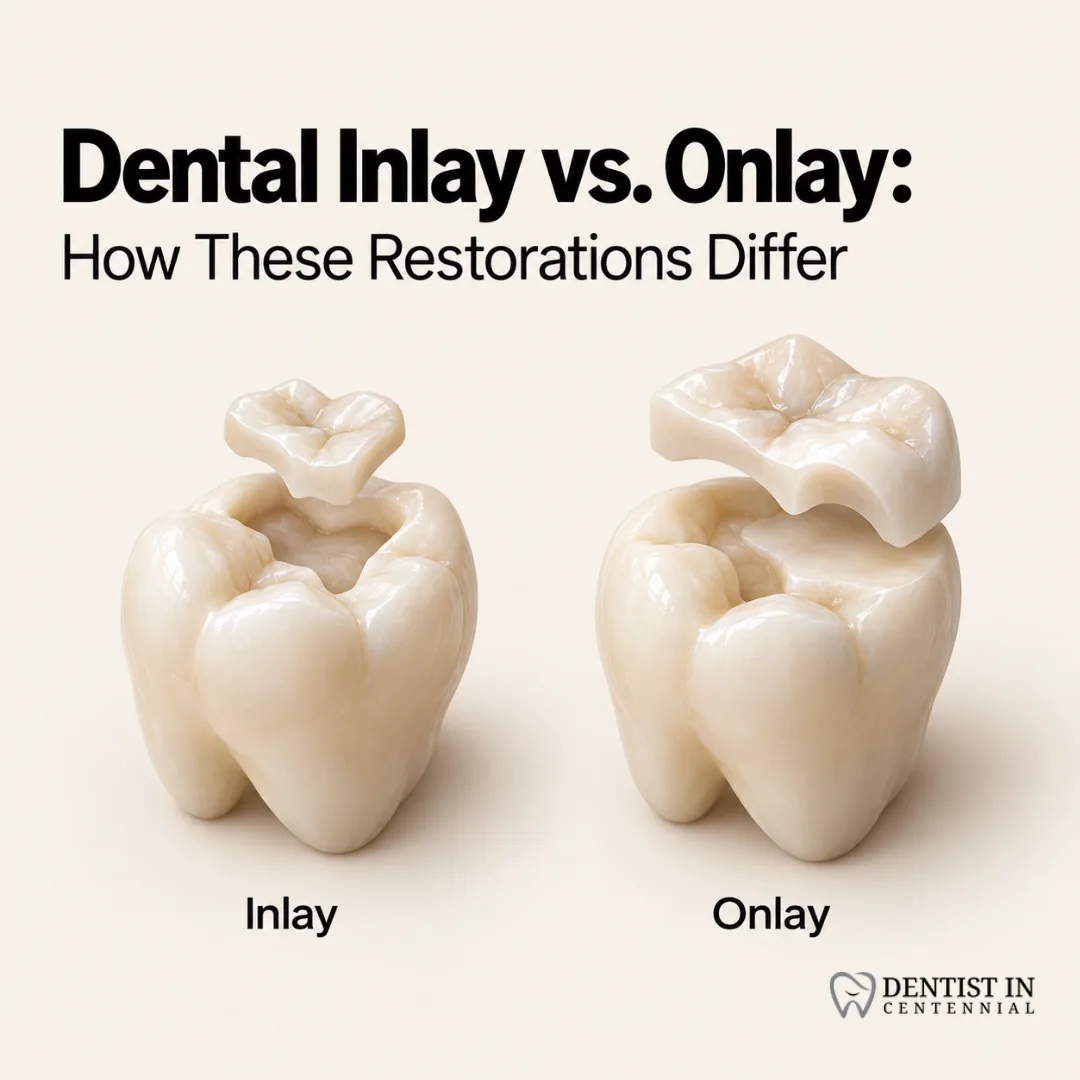
Many patients face a damaged or decayed tooth and do not know which fix to pick. Here you will understand simple differences between an inlay and an onlay.
An inlay fits inside the tooth cusps. An onlay covers one or more cusps. Both are molded restorations that aim to look natural and add strength. Dentists use different dental materials for each option, and that choice affects durability and aesthetic results.
Dental inlays and onlays serve different purposes in restoring teeth. Inlays fit within the cusps of a tooth, while onlays cover one or more cusps for added protection.
Inlays and onlays serve different purposes in dental restoration. An inlay fits inside the tooth's cusps, covering damage or decay. It restores function to the tooth while preserving much of its natural structure.
Onlays, on the other hand, cover one or more cusps of the tooth. This option offers greater coverage and strength for areas that endure more wear.
Dentists often assess factors like damage severity to determine which option is best. For instance, an extensive injury may require an onlay for extra support. Both restorations aim to restore oral health without compromising aesthetics.
Many patients appreciate how well these treatments blend with their natural teeth, enhancing overall appearance while ensuring durability and strength.
Dental inlays and onlays use different materials that affect their strength and longevity. Inlays often consist of ceramic or composite resin, which can blend well with the natural tooth color.
These materials typically last around five to seven years. Onlays usually incorporate stronger materials like porcelain or gold, providing better durability. Their lifespan can reach up to ten years or more with proper care.
Patients who prioritize aesthetics may prefer inlays due to their natural appearance. Those needing extra strength might choose onlays for added protection against damage from chewing forces. Each option has unique benefits depending on individual needs and the severity of tooth decay or injury.
Dental inlays and onlays require similar treatment procedures. First, a dentist examines the tooth to assess damage. They take X-rays to understand the extent of issues with the tooth structure.
For dental inlays, dentists remove decay from inside the cusp of the tooth. For onlays, they also address cavities that extend beyond one or more cusps. Dentists then take molds of the prepared teeth for custom restorations. A dental lab creates these restorations using materials like porcelain or resin for strength and aesthetics.
After preparing and placing temporary coverings, dentists schedule a follow-up appointment. At this visit, they bond either an inlay or an onlay securely into place. Patients often leave with restored function and improved appearance after these procedures are complete. Factors such as severity of injury will guide which option is best suited for them next time.
Choosing the right dental restoration requires careful thought. The severity of the tooth damage and its location play significant roles in making this decision.
Dental professionals assess the severity and location of damage to determine whether an inlay or onlay is the best option for restoration. Inlays suit minor issues, like smaller cavities that don't affect tooth cusps. Onlays provide better coverage for more extensive damage involving one or more cusps.
If the injury occurs on a visible tooth, aesthetics become essential. Patients often prefer materials that blend well with natural teeth for a seamless appearance. Specific cases may require additional strengthening, which can lead dentists towards recommending onlays over inlays due to their greater durability and support. Factors such as these influence the choice between dental restorations effectively.
Aesthetics play a crucial role in choosing between dental inlays and onlays. Many patients prefer a restoration that blends well with their natural tooth color. Both options can use porcelain or composite resin to achieve an appealing look. These materials keep their brightness over time, making them ideal for visible areas.
Durability is another key factor. Inlays typically offer solid strength for minor damage, while onlays provide coverage for larger areas, especially around cusps. Patients often find that both types last many years if cared for properly.
Regular dental visits ensure optimal bonding and maintenance of the restoration's integrity. For those who prioritize aesthetics along with long-term durability, discussing these options with a dentist becomes essential.
Aesthetics and durability play vital roles in dental restoration choices. The dentist's recommendations depend on various factors like the severity of tooth damage and the location of the injury. Each patient's needs vary, so consultation is essential.
Dentists assess how much coverage each option provides. They consider material strength and bonding abilities as well. Patient preferences also matter; some may prefer a natural look while others prioritize durability. Open communication ensures that patients receive personalized care tailored to their unique situations.
An inlay is a tooth restoration that fits inside the cusp walls. An onlay covers one or more cusps, so it acts like a partial crown. Both are dental restorations made to repair a damaged tooth.
Dentists pick an inlay for damage that stays inside the cusp walls. They pick an onlay when an injury or decay reaches the cusp tips. The choice depends on needed coverage and the dental treatment plan.
Both inlays and onlays add strength to a tooth. They bond to the tooth and fit tightly. Proper bonding and a molded fit help protect the tooth from future injury.
Yes. Labs match color and shape to your natural tooth. The result keeps a good aesthetic. Good dental work looks and feels like a real tooth.
The dentist removes decay and takes a mold. A lab makes the restoration, molded to your tooth. The dentist bonds it in place and checks the coverage and fit.
Tell us a little about what you need — we'll be in touch shortly.
20269 E Smoky Hill Rd, Centennial, CO 80015, United States
Hi! I'm Tooth fairy! Your AI Assistant Ask me anything