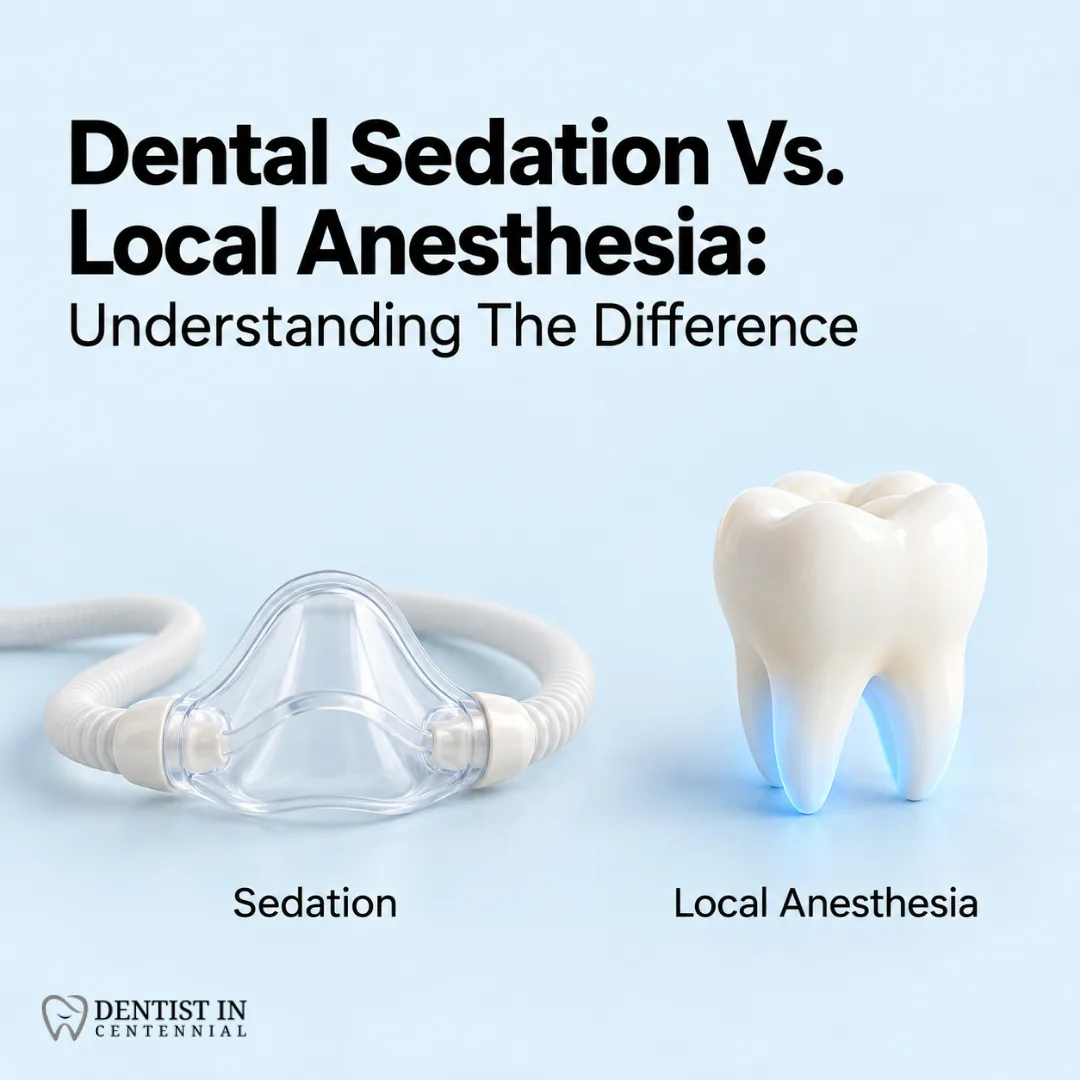
Many people fear the dentist. They worry about pain and losing control. They ask if sedation or local numbing is better.
One fact helps clear the fog, dental sedation affects consciousness while local anesthesia blocks pain in a specific spot. Here you will understand common sedation types and show when each option fits.
Local anesthesia numbs a spot in the mouth so the dentist can work. It blocks pain signals in nerves near a tooth or gums. Dentists use lidocaine or articaine most often.
Patients often report pressure but no sharp pain during fillings or root canals. This method helps with pain management and provides targeted analgesia for routine and emergency dental procedures.
Clinicians choose local anesthesia for most extractions and oral surgery that do not need full sleep. Some cases call for conscious sedation or general anesthesia if the patient feels severe anxiety or if treatment will take hours.
A clinician recalls treating a patient with a severe gag reflex, adding mild sedation and keeping the patient calm. Local blocks keep patient comfort high while avoiding the risks tied to deeper sedation.
Nitrous oxide works fast and wears off fast. Dentists use it for mild anxiety and quick procedures. Oral pills help for moderate fear and longer visits. A patient might take a pill 30 to 60 minutes before arrival.
IV sedation gives deeper calm and steady control. Clinicians monitor heart rate and oxygen. Conscious sedation lets patients respond to commands. General anesthesia puts the patient fully asleep for complex oral surgery.
Clinics match the method to the case and patient comfort. Teams discuss medical history and current medications. A nurse or anesthetist often manages IV lines and monitors vitals. Patients report less pain and stress with the right plan.
Doctors also use local analgesia along with sedation for targeted pain control. Staff explain side effects, fasting rules, and recovery steps in plain language. A simple joke from the dentist can ease nerves, and a warm blanket helps too.
This section compares dental sedation and local anesthesia.
| Topic | Comparison |
|---|---|
| Purpose |
|
| Onset and Duration |
|
| Consciousness and Memory |
|
| Pain Control |
|
| Anxiety Control |
|
| Monitoring and Safety |
|
| Recovery and Aftercare |
|
| Cost and Accessibility |
|
| Best Use Cases |
|
| First-Hand Account |
|
Dental sedation uses medication to help patients relax during procedures. It can make your visit less stressful and more comfortable.
Local anesthesia numbs a specific area in your mouth. You will be awake but won't feel pain in the treated area.
Choose dental sedation for longer or more complex procedures, especially if you have anxiety about the dentist. Local anesthesia works well for simple treatments like fillings.
Both options are generally safe, but they come with some risks. Dental sedation may cause drowsiness or breathing issues, while local anesthesia might lead to allergic reactions or temporary numbness beyond the treatment site.
Tell us a little about what you need — we'll be in touch shortly.
20269 E Smoky Hill Rd, Centennial, CO 80015, United States
Hi! I'm Tooth fairy! Your AI Assistant Ask me anything