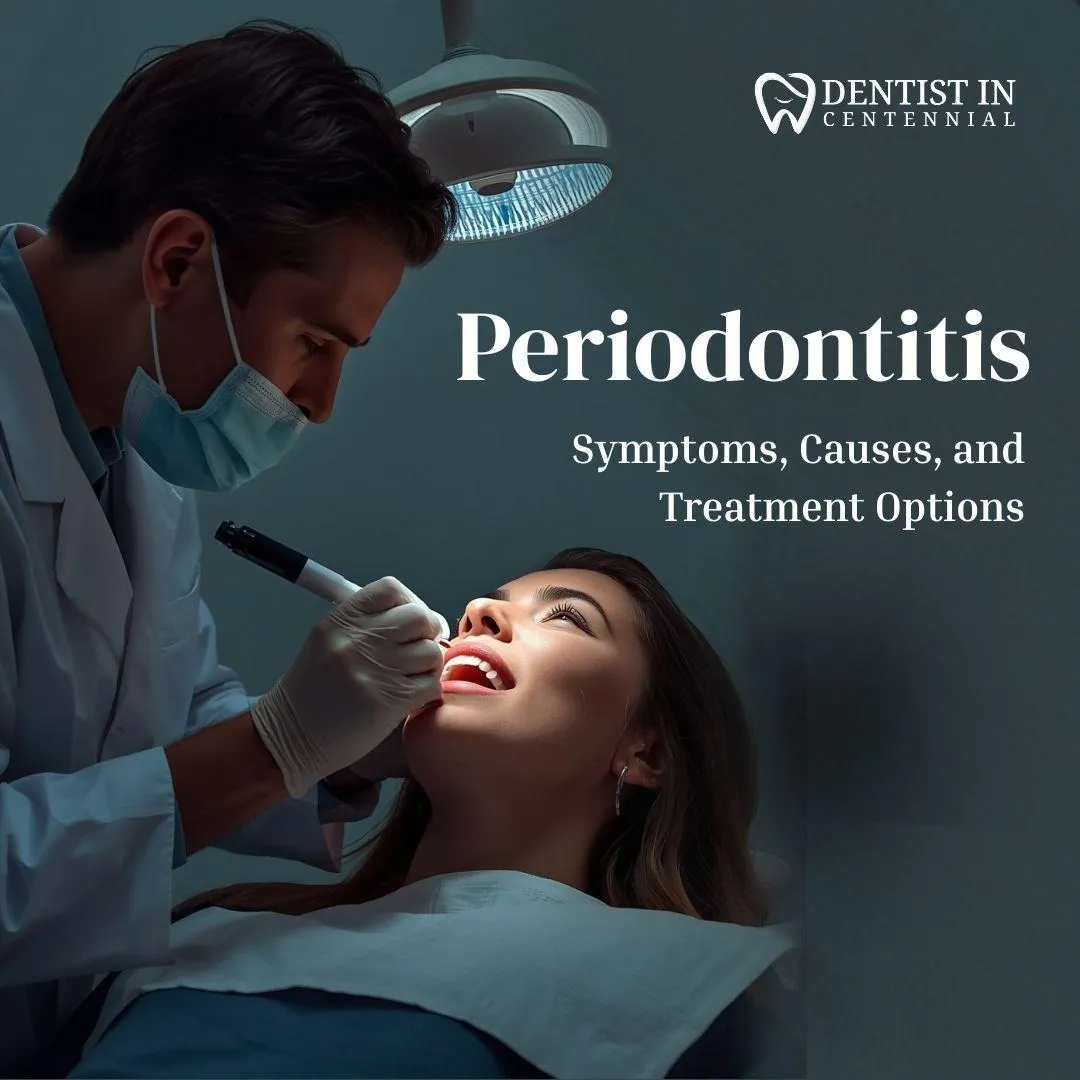
Periodontitis is a severe gum infection that damages the soft tissue and bone that support teeth. It is an infection of the tissues that hold teeth in place. Gums become sore, swollen, and bleed.
Gums may look bright red, dark red, or dark purple. Teeth can feel sensitive or loose. New gaps can form between teeth. Bad breath and tooth loss can follow. Plaque and bacteria cause inflammation and gum disease. Periodontal disease can cause bone loss and serious health complications beyond tooth loss.
Poor brushing and flossing habits usually cause periodontal disease. Mild forms of gum disease can reverse with improved brushing, flossing, and regular professional dental cleanings.
Dentists treat periodontitis with scaling, deep cleaning, and root planing. Good oral hygiene and dental care reduce plaque and bacteria. Regular dental visits help prevent worsening and protect oral health.
After discussing the importance of oral health, it is essential to recognize the symptoms of periodontitis. This condition often presents with tender and swollen gums. Individuals may notice bleeding gums during brushing or flossing. The color of these gums can shift to bright red, dark red, or dark purple.
Sensitive teeth pose another warning sign. Loose teeth and new gaps between them also indicate periodontal disease’s progression. Bad breath frequently accompanies this issue as well.
Recognizing these symptoms quickly can lead to timely treatment and help prevent tooth loss and further complications linked to gum disease.
Recognizing the symptoms of periodontitis helps to understand its underlying causes. Poor brushing and flossing habits typically lead to periodontal disease. Bacteria build up in plaque, causing infection in the tissues that hold teeth in place. This infection leads to inflammation, swelling, and bleeding gums.
Other risk factors contribute to gum disease as well. Smoking significantly increases the chances of developing periodontitis. Diabetes can also make people more vulnerable due to issues with blood sugar levels affecting oral health.
Stress and certain medications may worsen symptoms by reducing saliva flow or hindering immune responses against bacteria in the mouth. These factors emphasize the importance of proper dental care and regular visits to maintain oral hygiene.
Effective treatment for periodontitis focuses on reducing inflammation and removing plaque. Dental professionals perform scaling and root planing to clean the teeth below the gum line.
This deep cleaning helps eliminate bacteria that cause gum disease, preventing further damage to gums and bones. Regular professional dental cleanings play a vital role in maintaining oral health.
Prevention strategies are equally important. Good oral hygiene is essential in avoiding periodontal disease. Brushing and flossing daily can prevent gum disease from developing or worsening.
Individuals should also schedule regular dental check-ups to catch any early signs of inflammation or infection, such as bleeding gums or bad breath. Keeping up with these habits protects against tooth loss and other serious health complications linked to periodontal issues. For a broader look at keeping gums healthy, see our complete guide to gum health.
Periodontitis is a severe form of gum disease. It follows gingivitis when plaque causes inflammation. It attacks the tissues that hold teeth. It can lead to tooth loss and harm oral health.
Watch for bleeding gums and bad breath. Look for swollen or red gums and receding gums. Teeth may feel loose. These symptoms show inflammation and trouble in oral health.
Plaque buildup on teeth starts the problem. Poor oral hygiene lets plaque grow and cause inflammation. Smoking, certain medicines, and medical conditions can raise risk. Untreated gingivitis can turn into periodontitis.
Dentists use scaling and root planing for early disease. They also do deep cleaning, and give antibiotics when needed. In advanced cases they may use surgery. All treatment aims to stop plaque, reduce inflammation, and save teeth.
Brush and floss each day to remove plaque. Visit for regular cleanings and checkups. Keep good oral hygiene and quit smoking if you can. Treat gingivitis early to avoid tooth loss.
If your gums bleed, feel tender, or your teeth feel loose, don’t wait — periodontal treatment in Centennial can stop periodontitis before it costs you teeth.
Periodontitis is a severe gum infection that damages the soft tissue and bone supporting the teeth. It generally follows gingivitis, when plaque and bacteria cause ongoing inflammation of the tissues that hold teeth in place. Left untreated it leads to bone loss, loose teeth, and tooth loss, and it has been linked to broader health complications.
Watch for tender and swollen gums, bleeding while brushing or flossing, and gums that look bright red, dark red, or dark purple. Teeth may feel sensitive or loose, new gaps can appear between them, and bad breath often accompanies the condition. Recognizing these signs early allows treatment before tooth loss occurs.
Poor brushing and flossing habits are the usual starting point. Bacteria build up in plaque and infect the tissues holding the teeth, producing inflammation, swelling, and bleeding. Smoking significantly raises the risk, and diabetes increases vulnerability through the effect of blood sugar on oral health. Stress and some medications worsen it by reducing saliva or blunting immune response.
Treatment focuses on reducing inflammation and removing plaque. Dentists perform scaling and root planing to clean the tooth surfaces below the gum line, which eliminates the bacteria driving the disease and helps prevent further damage to gums and bone. Antibiotics are used when needed, and advanced cases may require surgical treatment.
Largely, yes. Brushing and flossing daily removes the plaque that starts the process, and regular professional cleanings remove hardened deposits that home care cannot reach. Routine checkups catch early signs such as bleeding gums or persistent bad breath while the disease is still reversible. Treating gingivitis promptly and quitting smoking both reduce the risk considerably.
Tell us a little about what you need — we'll be in touch shortly.
20269 E Smoky Hill Rd, Centennial, CO 80015, United States
Hi! I'm Tooth fairy! Your AI Assistant Ask me anything